
.png)


Testosterone Replacement Therapy (TRT)
in Luton
.png)
If you’re experiencing low energy, reduced libido, or ongoing fatigue, you may be dealing with low testosterone. At Luton Clinic, we provide expert-led Testosterone Replacement Therapy (TRT) in Luton and Bedfordshire, helping men restore hormonal balance and
improve overall wellbeing.
We specialise in diagnosing and treating testosterone deficiency using evidence-based medicine. Our goal is not just to increase testosterone levels, but to help you regain energy, confidence, and long-term health through a structured and monitored approach.
Our clinic offers private, confidential consultations, fast access to blood testing,
and fully personalised treatment plans tailored to your needs.
Book a consultation now from just £125 and see a GP this week.

What is Testosterone?
Testosterone is the primary male hormone responsible for regulating many essential functions in the body.
It plays a key role in maintaining sex drive, energy levels, muscle mass, bone density, and mood stability.
While testosterone naturally declines with age, some men develop significantly low levels, known as testosterone deficiency or hypogonadism. This can affect both physical and mental wellbeing, often without being immediately recognised as a hormonal issue.

Do You Have Symptoms of Low Testosterone?
Low testosterone can present in a variety of ways, often developing gradually over time. Many men initially attribute these symptoms to stress, ageing, or lifestyle factors.
Common symptoms include reduced libido, erectile dysfunction, persistent fatigue, low mood, and a noticeable decline in motivation or focus.
Some men also experience increased abdominal fat, reduced muscle mass, and difficulty maintaining physical performance.
Recognising these symptoms early is important, as proper diagnosis through blood testing is the only way to confirm whether testosterone levels are low.

What is Testosterone Replacement Therapy (TRT)?
Testosterone Replacement Therapy (TRT) is a medically prescribed treatment designed to restore testosterone levels to a healthy, physiological range.
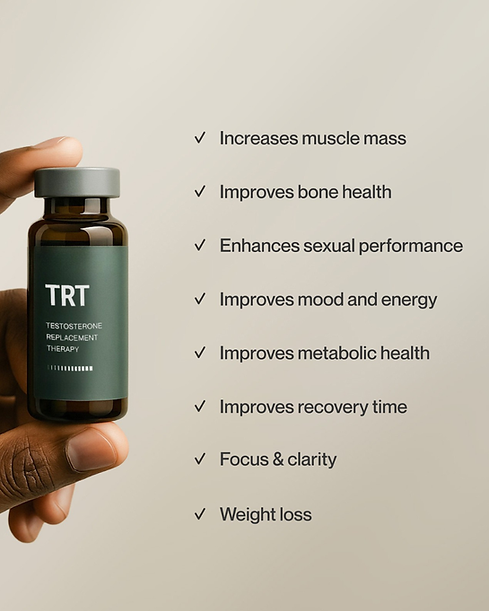
At Luton Clinic, TRT is only initiated following a full clinical assessment and blood testing. When appropriately prescribed, TRT can significantly improve energy levels, sexual health, body composition, and mental clarity.
Our approach focuses on achieving optimal hormone balance while maintaining long-term safety through ongoing monitoring.
01.
Long-acting injections, such as Nebido, are commonly used for their convenience and stable hormone levels over time.
02.
Short-acting injections may be suitable for patients who prefer more frequent dose adjustments.
03.
Topical gels or creams provide a non-invasive option, applied daily to the skin, while implants are less commonly used in the UK but may be considered in specific cases.
TRT Treatment Options Available in Luton
Our clinicians will guide you through these options to determine the most effective and practical treatment plan.

Possible Risks and Side Effects
Safety is a core part of TRT treatment. At Luton Clinic, all patients undergo regular monitoring to ensure therapy remains both effective and safe over time.
This includes routine blood tests to assess testosterone levels, red blood cell count, prostate health (PSA), liver function, and cholesterol levels. Monitoring allows us to make precise adjustments to your treatment and reduce the risk of complications.
Our structured follow-up process ensures you receive consistent medical oversight throughout your TRT journey.
Safe & Medically Supervised TRT
Safety is a core part of TRT treatment. At Luton Clinic, all patients undergo regular monitoring to ensure therapy remains both effective and safe over time.
This includes routine blood tests to assess testosterone levels, red blood cell count, prostate health (PSA), liver function, and cholesterol levels. Monitoring allows us to make precise adjustments to your treatment and reduce the risk of complications.
Our structured follow-up process ensures you receive consistent medical oversight throughout your TRT journey.


Can Testosterone Be Boosted Naturally?
In some men, testosterone levels can improve through targeted lifestyle changes. Even if TRT is required, these strategies remain an essential part of long-term health and hormone optimisation.
A balanced diet rich in protein, healthy fats, and key micronutrients such as zinc, vitamin D, and magnesium supports hormone production. Reducing processed foods and excess sugar can also have a positive impact.
Lifestyle factors are equally important. Regular resistance training, maintaining a healthy weight, prioritising sleep, managing stress, and limiting alcohol intake all contribute to healthier testosterone levels.
Start Your TRT Journey in Luton Today
If you’re experiencing symptoms of low testosterone, taking the first step towards diagnosis and treatment can make a significant difference.
At Luton Clinic, we provide expert-led care for patients across Luton and Bedfordshire, offering clear guidance, fast access to testing, and personalised treatment plans.
Important Medical Advice
Testosterone Replacement Therapy should only be started following a thorough medical assessment and confirmed blood test results.
Obtaining testosterone without medical supervision or using unregulated treatments can pose serious health risks and lead to complications.
At Luton Clinic, all treatments are prescribed and monitored in line with clinical guidelines to ensure patient safety.
When do I speak to a Doctor?
You should consider seeking medical advice if you experience persistent fatigue, reduced libido, erectile dysfunction, or ongoing mood changes that affect your quality of life.
If you are already on TRT and notice new symptoms such as urinary changes, breast tenderness, or significant mood shifts, it is important to contact your clinician promptly.
Early assessment allows for accurate diagnosis and appropriate treatment planning.